
 By admin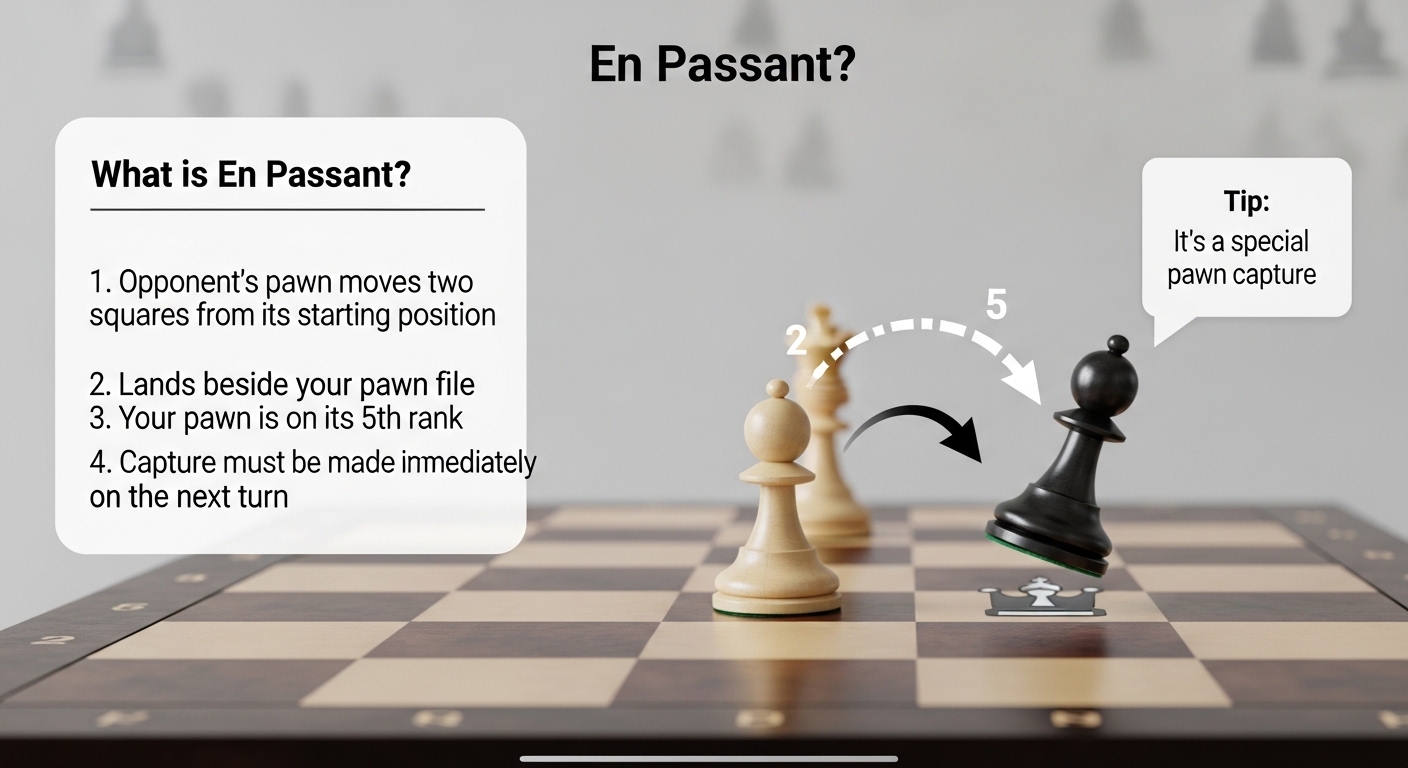
Chess is a game of strategy, precision, and hidden opportunities, and few moves capture this better than en passant. Often misunderstood by beginners, this special pawn capture can shift the momentum of a match in an instant. While it appears simple on the surface, mastering en passant requires awareness, timing, and a clear understanding of pawn dynamics. The concept in depth, explaining how it works, why it exists, and how players can use it effectively to gain a competitive edge during gameplay.
Understanding the Basics of En Passant
En passant is a unique pawn capture rule in chess that allows a pawn to capture an opponent’s pawn under specific conditions. It occurs when a pawn moves two squares forward from its starting position and lands beside an opposing pawn. The opposing pawn can then capture it as if it had moved only one square forward. This move must be executed immediately on the next turn or the opportunity is lost. Understanding en passant is essential because it ensures that pawn movement remains balanced and prevents players from bypassing potential captures unfairly during the game.
The Historical Purpose Behind En Passant
The rule of en passant was introduced to maintain fairness in the evolution of chess. When pawns were first allowed to move two squares forward on their initial move, it created a loophole where they could avoid capture too easily. En passant was designed to correct this imbalance by giving opposing pawns a chance to capture as if the pawn had only moved one square. This adjustment preserved strategic depth and prevented exploitation of the two-square advance. Today, en passant remains a vital part of chess rules, reflecting the game’s long history of refinement and balance.
When and How En Passant Can Be Played
To execute en passant correctly, specific conditions must be met during a match. First, an opposing pawn must move two squares forward from its starting position, landing adjacent to your pawn. Then, your pawn must be positioned on the fifth rank if you are white, or the fourth rank if you are black. The capture must occur immediately on the next move; otherwise, the right to perform en passant disappears. This timing requirement makes the move both tactical and situational, encouraging players to stay alert and recognize opportunities as they arise during gameplay.
Strategic Importance of En Passant in Chess
En passant may seem like a minor rule, but it can have a significant strategic impact. It allows players to remove a pawn that could otherwise advance and create threats later in the game. This can be particularly useful in controlling the center or preventing the formation of strong pawn structures. Skilled players use en passant not only as a defensive tactic but also as a way to disrupt their opponent’s plans. By incorporating this move into their strategy, players can maintain better board control and create new opportunities for attack and positional advantage.
Common Mistakes Players Make with En Passant
Many players, especially beginners, either forget about en passant or misunderstand how it works. One common mistake is failing to recognize the opportunity when it arises, missing a chance to capture an opponent’s pawn. Another error is attempting to perform en passant after a delay, which is not allowed under the rules. Some players also misinterpret the positioning required for the move. These mistakes can lead to lost advantages or even confusion during matches. Developing a clear understanding of en passant helps players avoid these pitfalls and use the rule effectively in real gameplay situations.
How En Passant Affects Pawn Structure
Pawn structure plays a critical role in chess strategy, and en passant can influence it in subtle but important ways. By capturing a pawn en passant, players can open files, disrupt pawn chains, and create weaknesses in their opponent’s formation. This can lead to better positioning for rooks and other pieces, improving overall board control. Additionally, removing a pawn through en passant can prevent it from supporting other pawns, weakening the opponent’s defensive setup. Understanding how this move affects pawn structure allows players to make more informed decisions and develop stronger long-term strategies during a match.
Practical Tips to Remember En Passant Opportunities
Recognizing en passant opportunities requires awareness and practice. Players should pay close attention whenever an opponent moves a pawn two squares forward, especially if their own pawn is nearby. Keeping track of pawn positions and potential captures helps ensure that no opportunity is missed. Practicing games and reviewing past matches can also improve recognition of this move. Over time, en passant becomes a natural part of a player’s thinking process. By staying attentive and developing good habits, players can incorporate this rule into their gameplay without hesitation or confusion.
En Passant in Competitive and Online Chess
In both competitive tournaments and online chess platforms, passant is strictly enforced according to official rules. Players are expected to know and apply it correctly, as failing to do so can result in missed opportunities or disadvantages. Online platforms often highlight possible moves, making it easier for beginners to learn, while competitive settings rely entirely on player knowledge. Understanding passant is therefore essential for anyone aiming to improve their chess skills. Mastery of this rule demonstrates attention to detail and a deeper understanding of the game’s mechanics and strategic possibilities.
Why En Passant Reflects the Depth of Chess
En passant is more than just a special rule; it reflects the depth and complexity that make chess a timeless game. Its existence shows how even small adjustments can have a meaningful impact on strategy and fairness. This move encourages players to think carefully about every action and its consequences. It also highlights the importance of understanding rules beyond the basics. By mastering passant, players gain insight into the intricate balance of chess and develop a more thoughtful approach to the game, enhancing both their skill and appreciation for its strategic richness.
Conclusion
En passant is a fascinating and essential element of chess that combines historical significance with practical strategy. Although it may appear simple, its proper use can influence the outcome of a game by altering pawn structure and creating tactical opportunities. Understanding when and how to use passant allows players to avoid common mistakes and strengthen their overall gameplay. As part of a well-rounded chess strategy, this rule highlights the importance of awareness and precision. Mastering passant ultimately contributes to a deeper understanding of chess and a more confident approach to competition.