
 By admin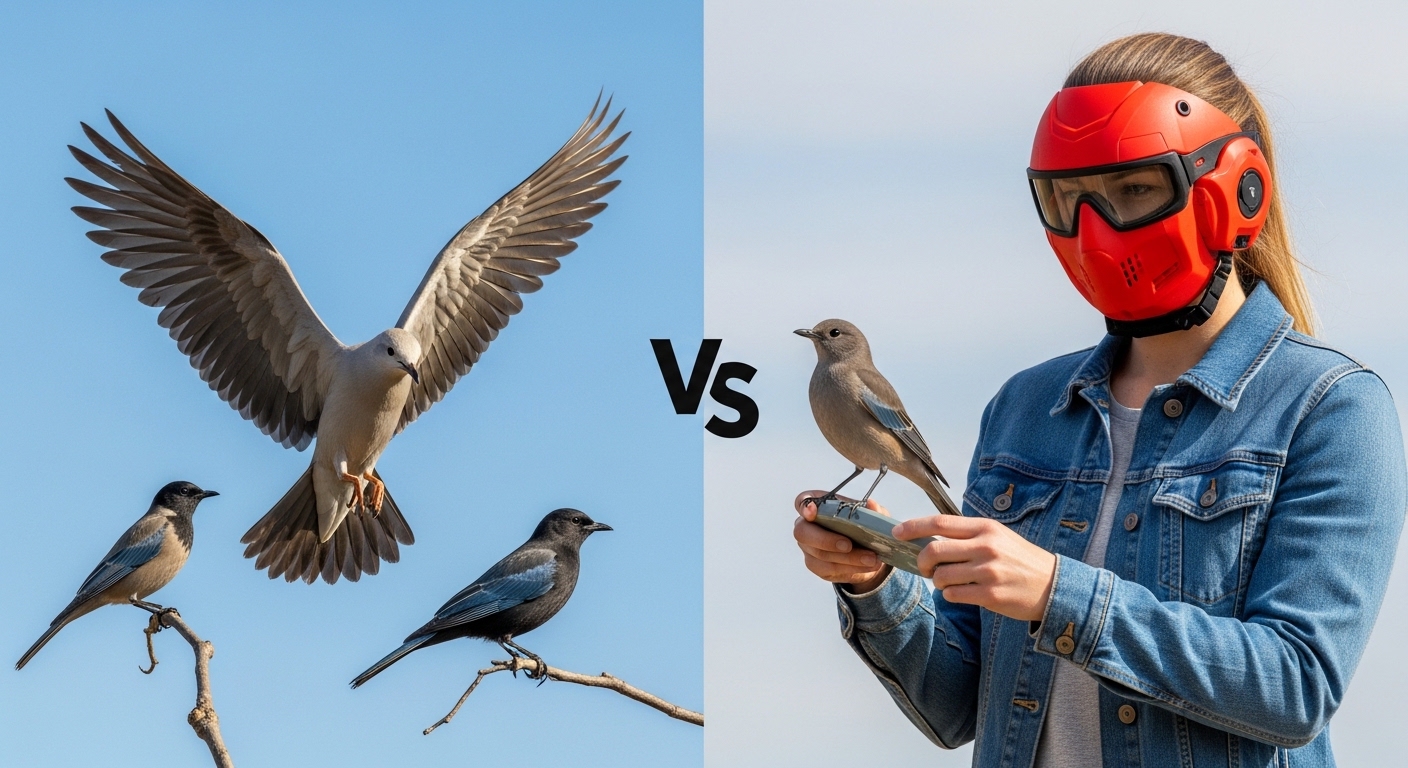
The debate of birds versus robots represents an intriguing exploration of nature and technology. Birds, with their natural agility, navigation skills, and adaptability, have inspired engineers and scientists to develop robots that mimic their abilities. From aerial drones to robotic swarms, technology increasingly borrows from avian biology to enhance efficiency and functionality. Comparing birds and robots provides insights into evolutionary design versus engineered precision, highlighting both the strengths of nature and the potential of innovation. Understanding this interaction sheds light on biomimicry, robotics development, and the ways humans are learning from natural flight systems to create advanced technology.
The Flight Mechanics of Birds
Birds are marvels of evolutionary engineering, capable of controlled flight through the coordination of wings, feathers, and lightweight skeletons. Their muscles provide the lift and thrust required for long-distance travel, while their feathers allow fine-tuned maneuvering. Birds also use instinctual navigation techniques, including geomagnetic sensing and visual landmarks, to migrate efficiently. The ability to adapt to changing weather conditions and evade predators demonstrates their complex survival skills. Studying these mechanics helps scientists design robots that replicate similar motion and efficiency. Birds serve as a natural blueprint, inspiring roboticists to create machines capable of agile, energy-efficient flight in diverse environments.
Robotics Inspired by Birds
Robots inspired by birds, often referred to as biomimetic drones, are designed to emulate avian flight patterns. Engineers replicate wing flapping, feathered surfaces, and lightweight structures to achieve maneuverability and efficiency. These robotic systems are used in surveillance, environmental monitoring, and delivery services, where flexibility and precise motion are essential. By mimicking birds, robots can navigate obstacles, hover, and maintain stability in turbulent conditions. The study of birds’ aerodynamics informs design choices, enabling machines to achieve similar energy efficiency. Birds versus robots in flight dynamics illustrates how nature provides a template for technological innovation while presenting unique challenges in replicating biological complexity.
Navigational Abilities
Birds excel in navigation, using instinctual and learned behaviors to migrate over vast distances. Techniques such as celestial orientation, magnetic field sensing, and visual cues allow birds to find their way with remarkable accuracy. Robots, on the other hand, rely on GPS systems, sensors, and preprogrammed algorithms for navigation. While robotic navigation is precise in controlled environments, it lacks the adaptability and instinctive learning found in birds. Studying how birds process information and make rapid adjustments can enhance robotic systems, allowing machines to operate in unpredictable conditions. Birds versus robots in navigation demonstrates the balance between natural intuition and engineered computation.
Energy Efficiency in Flight
Birds exhibit exceptional energy efficiency, optimizing wing shape and flight patterns to conserve energy during long journeys. Techniques such as gliding, thermaling, and V-formation flying reduce exertion and enhance endurance. Robotic systems aim to replicate these efficiencies but face limitations due to power source constraints and mechanical complexity. Engineers study avian energy-saving strategies to improve battery life, reduce motor strain, and extend operational time for aerial robots. Birds versus robots in energy efficiency highlights how evolutionary adaptation surpasses current technological capabilities, encouraging continuous improvement in drone design and sustainable robotic flight.
Sensory Perception
Birds possess highly refined sensory perception, including acute vision, spatial awareness, and auditory processing. These capabilities enable them to detect predators, locate food, and coordinate in flocks. Robots rely on cameras, lidar, and microphones to gather information, but sensor processing cannot fully replicate biological perception. Innovations in artificial intelligence and machine learning are gradually enhancing robotic sensory interpretation, yet birds maintain a natural advantage in integrating multiple sensory inputs instantly. Birds versus robots in sensory perception emphasizes the challenge of replicating complex, multi-layered biological systems and illustrates the potential for robotics to draw inspiration from natural sensory networks.
Environmental Adaptability
Birds demonstrate remarkable adaptability to diverse environments, from dense forests to urban landscapes and extreme climates. Their ability to adjust flight patterns, diet, and behavior ensures survival across varied ecosystems. Robots, although programmable for different tasks, struggle to match this versatility due to hardware and software limitations. Research in adaptive robotics often studies birds’ behavioral flexibility to improve autonomous systems. Understanding how birds respond to dynamic conditions helps engineers create robots capable of navigating complex terrains. Birds versus robots in adaptability underscores the inherent advantage of evolutionary experience over engineered design, while highlighting opportunities to enhance robotic versatility.
Swarm Behavior and Coordination
Many bird species display coordinated group behavior, such as flocking and migration in synchronized formations. These movements optimize energy use, enhance protection, and facilitate navigation. Robotic swarm technology seeks to emulate this behavior, allowing multiple drones to work collectively and communicate in real-time. Algorithms inspired by flocking patterns improve collaborative navigation, obstacle avoidance, and task execution. Birds versus robots in swarm behavior illustrates how observing nature informs robotics, enabling efficient coordination without centralized control. Biomimetic approaches demonstrate the potential for creating adaptive, intelligent robotic systems based on principles learned from the collective behavior of birds.
Technological Limitations
While robotic systems have advanced rapidly, they remain limited in replicating the full complexity of birds. Challenges include weight constraints, battery life, and real-time environmental adaptation. Mechanical wings often lack the flexibility and responsiveness of natural feathers, and robotic navigation struggles with unpredictable conditions. Despite these limitations, ongoing research in materials science, artificial intelligence, and aerodynamics aims to close the gap. Birds versus robots highlights the difference between natural evolution, which balances efficiency and adaptability, and engineered systems, which optimize specific functionalities. Understanding these limitations drives innovation and informs future biomimetic designs.
Future Prospects in Biomimicry
The future of robotics increasingly looks toward birds for inspiration. Developments in lightweight materials, AI navigation, and adaptive wing mechanisms promise more efficient and versatile robotic flight. Potential applications range from environmental monitoring to search-and-rescue missions, where bird-inspired designs improve agility and reliability. Birds versus robots in the future will likely see a closer convergence, with machines incorporating biological principles while exceeding natural capabilities in precision and durability. Biomimicry continues to provide a rich source of ideas, demonstrating how observing and analyzing avian behavior can revolutionize technology and expand the boundaries of what robotics can achieve.
Conclusion
Birds versus robots represents a fascinating comparison between natural evolution and technological innovation. Birds excel in flight mechanics, navigation, energy efficiency, and adaptability, providing an enduring model for engineers. Robots, while limited in some aspects, benefit from precision, programmable control, and the ability to perform specialized tasks. By studying birds, scientists and engineers continue to develop advanced robotic systems that mimic biological functions and expand human capabilities. The interaction between avian biology and robotics illustrates the potential of nature-inspired technology and the ongoing quest to bridge the gap between natural intelligence and engineered performance.